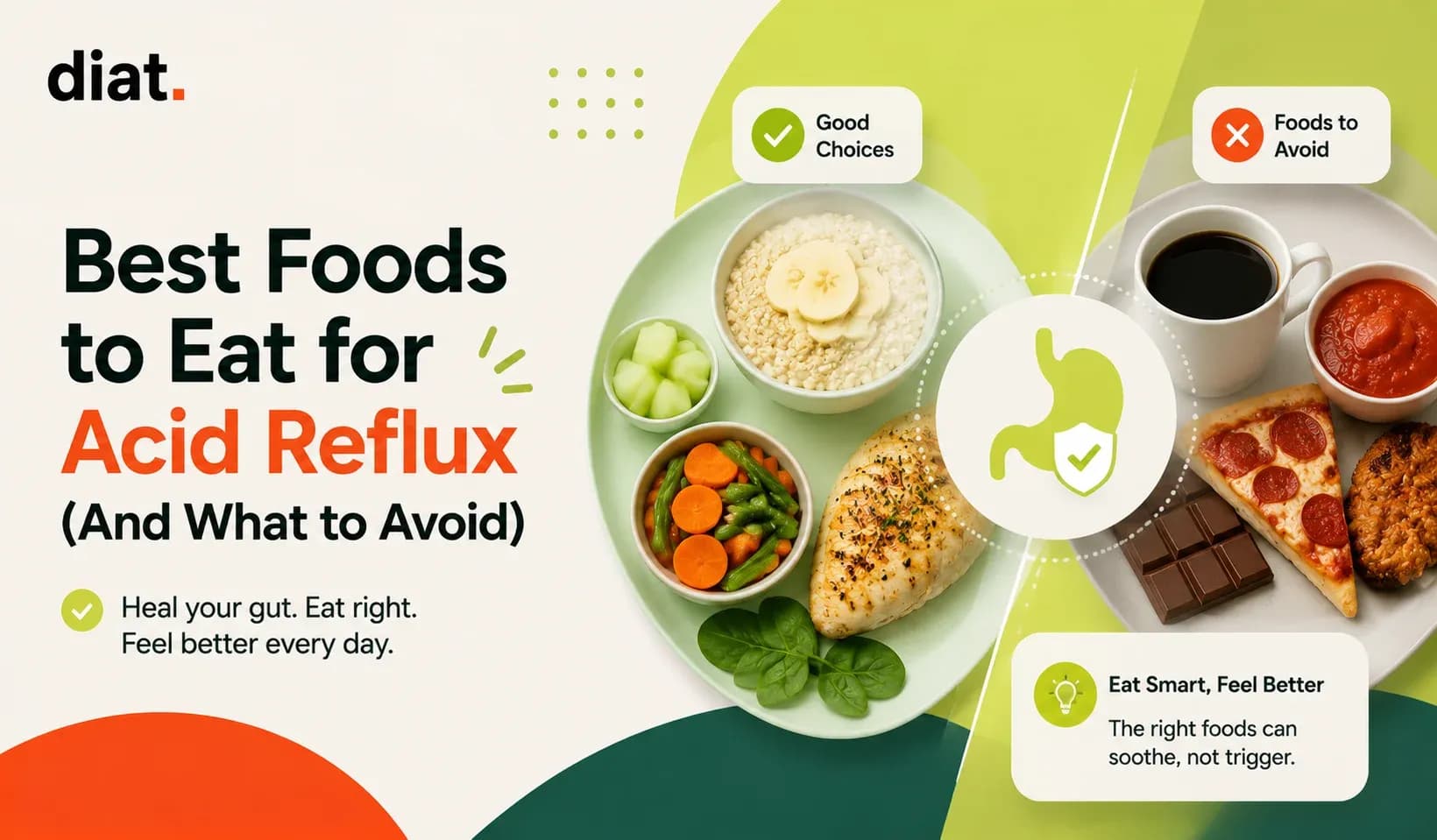
If you deal with frequent heartburn, you already know the frustration of eating a meal and waiting to see if it causes a flare-up. Acid reflux occurs when stomach acid flows back into the esophagus, and diet plays a direct role in managing it. The best foods to eat for acid reflux include high-fiber whole grains (like oatmeal and quinoa), water-rich vegetables (like celery and cucumber), and lean proteins. These foods help absorb excess stomach acid and promote healthy digestion to prevent the lower esophageal sphincter from relaxing unnecessarily.
Because triggers vary widely from person to person, the most effective management strategy is tracking what you eat. Diat lets you log meals instantly with a photo, making it easier to connect your diet to how you feel. Free to download on App Store and Google Play!

Eating Disorder Safety Note: Tracking food intake and restricting certain food groups is not appropriate for everyone, including those with a history of disordered eating, pregnant individuals, or adolescents. Consult a healthcare provider before beginning any tracking or restriction regimen. If you need support regarding eating habits, professional resources can help.
What Diat Does: The Fastest Food Diary
Medical institutions like Johns Hopkins Medicine consistently recommend keeping a food diary to identify acid reflux triggers. However, manual logging often fails because it takes too much time.
Diat uses AI photo analysis to eliminate that friction. Instead of searching a database for every ingredient on your plate, you snap a photo. The AI identifies the food and estimates the macronutrient breakdown. When a heartburn episode strikes at 9 PM, you have an exact visual record of what you ate for dinner at 6 PM, helping you isolate the culprit without the tedious data entry.
Best Foods to Reduce Heartburn
Based on clinical guidelines from authoritative sources like Mass General Brigham and the Children's Hospital of Philadelphia (CHOP), an acid reflux diet should prioritize foods that absorb acid and are easy to digest.
Food Category | Examples | Why It Helps |
|---|---|---|
Water-Rich Vegetables | Celery, cucumber, lettuce | Dilutes stomach acid and is naturally low in fat. |
High-Fiber Grains | Oatmeal, quinoa, brown rice | Absorbs stomach acid and promotes healthy digestion. |
Lean Proteins | Chicken breast, turkey, fish | Low in saturated fat (high-fat meals trigger reflux). |
Non-Citrus Fruits | Bananas, melons, apples | Highly alkaline; coats the esophageal lining. |
Healthy Fats (in moderation) | Walnuts, almonds, flaxseed | Provides necessary nutrients without the heavy burden of fried fats. |
Note on Nuts: The best nuts for acid reflux are generally almonds and walnuts, but portion size matters. High-fat foods of any kind can delay stomach emptying and trigger reflux if eaten in large amounts.
Food to Avoid with Heartburn
Certain foods are universal triggers because they either relax the esophageal sphincter or stimulate excess acid production. If you are keeping a food diary, watch for these common culprits:
- Citrus and Tomatoes: Oranges, grapefruits, tomato sauce, and salsa are naturally highly acidic.
- Carbonated Beverages: Is Sprite good for acid reflux? No. According to gastrointestinal experts, the bubbles in carbonated drinks expand the stomach, placing upward pressure on the esophageal sphincter.
- High-Fat and Fried Foods: French fries, heavy cheese, and fatty cuts of meat delay stomach emptying.
- Spicy Foods and Alliums: Garlic, onions, and hot peppers are notorious heartburn triggers.
(For more tips on identifying your personal dietary triggers, check out our broader guides on the Diat wellness blog.)
How to Log Your First Meal in Diat
Finding your personal trigger foods requires consistency. Diat's photo logging is designed for the moments when you do not have time to search a database—snap, confirm, move on.
- Open the App: Tap the camera icon on your daily dashboard.
- Snap a Photo: Point your camera directly at your plate (e.g., your quinoa and grilled chicken).
- Review the Breakdown: The AI will estimate the ingredients, calories, and macros.
- Confirm or Adjust: If the AI missed a side item, you can manually adjust it.
Honest Note on AI Accuracy: AI photo estimation is highly effective for identifying whole foods (like celery or bananas). However, it struggles with "hidden" triggers—like onion powder in a soup, hidden butter in restaurant meals, or heavy cooking oils. If you suspect a hidden ingredient caused a flare-up, you can manually add a text note to your meal log in Diat. Getting an approximate log is far more useful than not logging at all.
The fastest way to test any food-tracking approach is to use it for one week. Diat is free to download. Trusted by 500k+ users.