Intermittent fasting app on your schedule
Diat fasting at a glance
A free intermittent fasting app with your food log built in
Diat is a free intermittent fasting app for iPhone and Android. It combines a fasting timer with 14:10, 16:8, 18:6 and 20:4 plans, reminders before each fast starts and ends, and a food log for the meal that breaks your fast, so you track your eating window and what you eat in one app instead of two.
- Price
- Free to download. The timer, 12 to 20 hour plans, reminders, fasting history and food logging are free; Diat Plus adds 21 to 23 hour fasts, custom plans, fat-burning and autophagy alerts and 30-day patterns.
- Platforms
- iPhone and Android
- Free plans
- 14:10, 16:8, 18:6 and 20:4, each with its weekly schedule
- Timer
- Live lock-screen timer, reminders before a fast starts and ends, Auto Tracking and editable start and end times
- Insights
- Every fast on a calendar, streaks, goal hit rate, how you felt and personal records
- Food
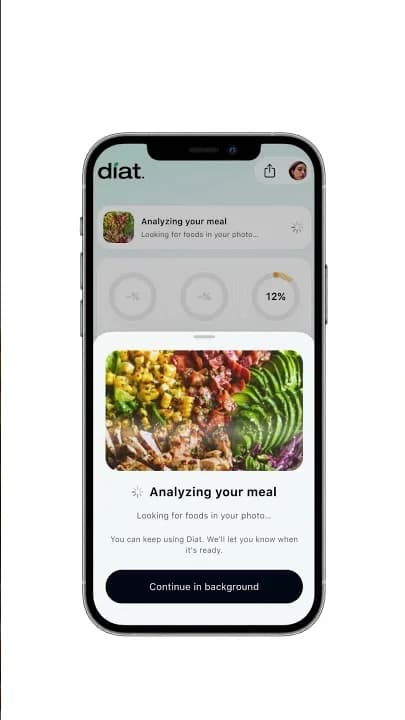
- Log the meal that breaks your fast from a photo or a search
Best for
- Beginners starting with a gentler 14:10 window
- People on 16:8 who also want to track calories
- Anyone who wants the fasting timer and food log in one app
- People who train and need their window to fit workouts
One app. Your whole window.
A timer that keeps going
Follow your fast on your lock screen, with reminders before it starts and ends.
Find your window
Explore eating-window plans from 14:10 to 20:4 in the free timer.
Keep meals in view
Log what you eat inside your window, next to your fasting timer.
Adjust with your coach
Ask Pip, your Diat coach, about your fasts, meals and training. Free replies included, more with Diat Plus.
Eating-window plansFind the window that fits your day
Pick a plan and when you start fasting to see your day. These are the free plans in the Diat timer.
- Fasting window8 PM – 12 PM
- Eating window12 PM – 8 PM
Regular
16:816 hours fasting- Start fasting at
- Fasting ends
- 12:00 PM (next day)
The stages of fasting, hour by hour
Your body’s energy needs change as your fast continues. Explore the stages, understand what may be happening, and see the research behind each one. Stage timings are estimates and vary from person to person.
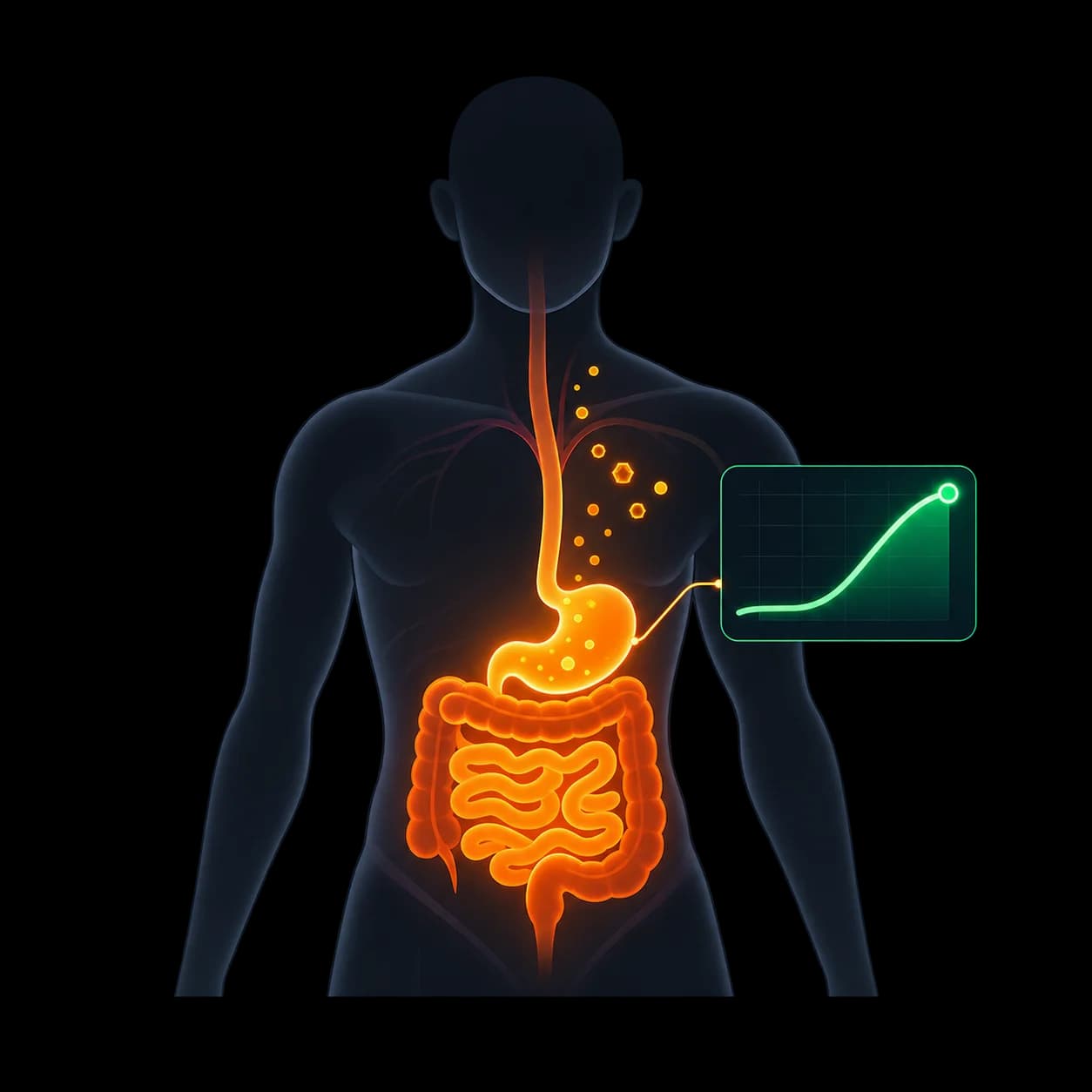
Blood Sugar Level Rises
Starts right after you eat
After you eat, digestion breaks carbohydrates into glucose, which enters the bloodstream. Insulin rises to help move glucose into cells for energy and storage.
Source
Some glucose is used right away, while extra glucose can be stored in the liver and muscles as glycogen for later use.
Your body remains in the fed state while digestion, absorption, and nutrient processing are active.
Blood sugar is normally tightly regulated; the size and timing of the rise depends on the meal and your individual metabolism.
Fat use does not stop completely, but higher post-meal insulin usually shifts the body toward using and storing incoming nutrients.
NCBI Bookshelf - Endocrinology (Baynes & Dominiczak)The Endocrine Pancreas
Blood Sugar Starts Returning
Usually back to normal 2–3 hours after eating
The rise in glucose from your last meal has mostly settled, so blood sugar begins returning toward its usual range. Your body starts transitioning from fed mode toward early fasting.
Source
Insulin levels continue to decrease as less new energy is coming in, which encourages your body to begin drawing more on stored glycogen.
You may experience light hunger or cravings, as the body gets used to the shift in energy availability. This is a normal response as your fuel source changes.
Your liver begins using glycogen stores to help keep blood sugar stable as your fasting window continues.
American Diabetes AssociationPostprandial Blood Glucose. Diabetes Care 24(4):775–778
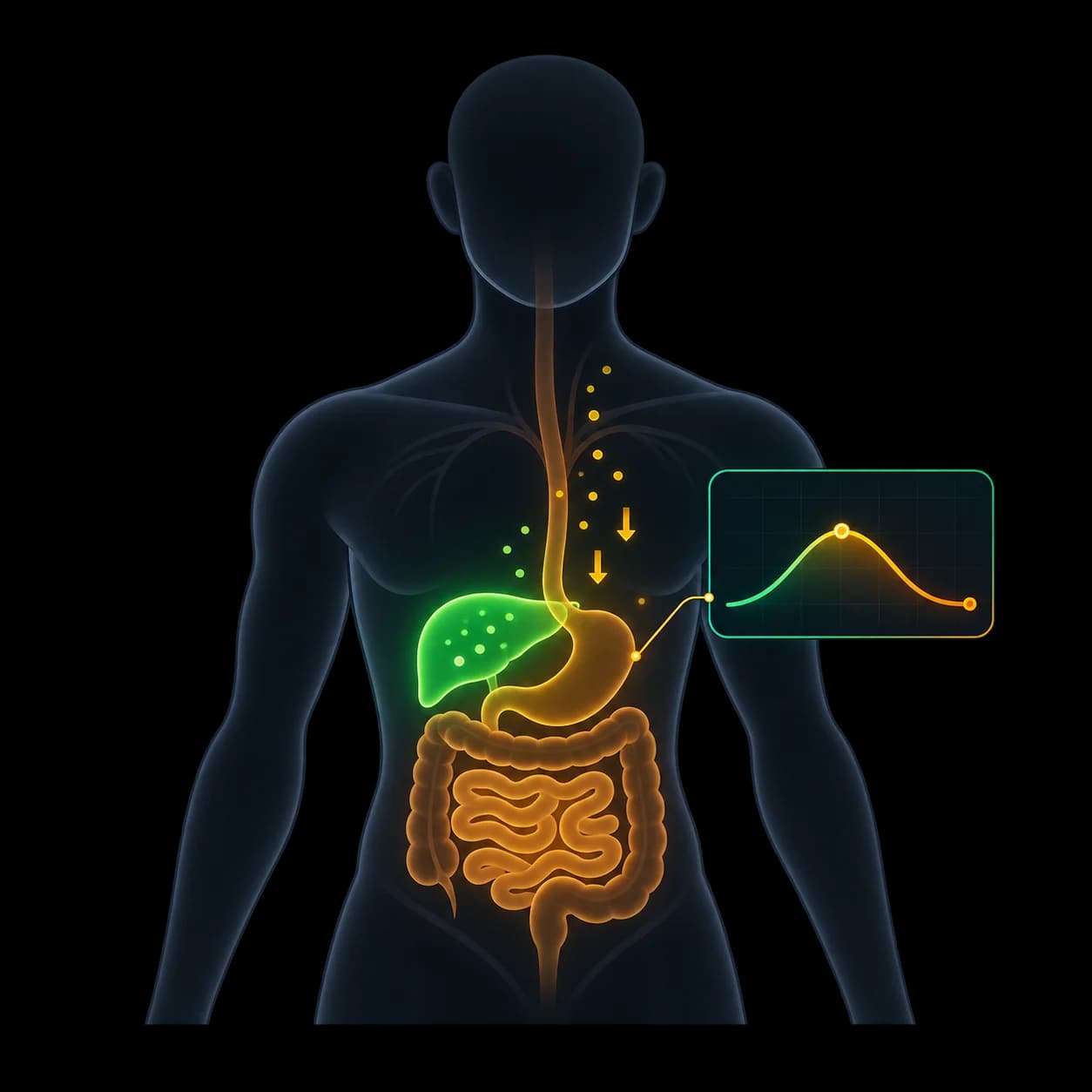
Blood Sugar Stabilizes
Around 9 hours into your fast
Blood sugar is usually being kept in a normal range by stored fuel, especially glucose released by the liver during early fasting.
Source
The liver releases glucose from glycogen and begins increasing glucose production from other sources to support steady energy.
Hunger may become more manageable as your body adapts to maintaining energy without new calories coming in.
Fat use can gradually increase as insulin stays lower, though the timing varies with activity, meal composition, and individual metabolism.
StatPearls (NCBI Bookshelf)Physiology, Fasting
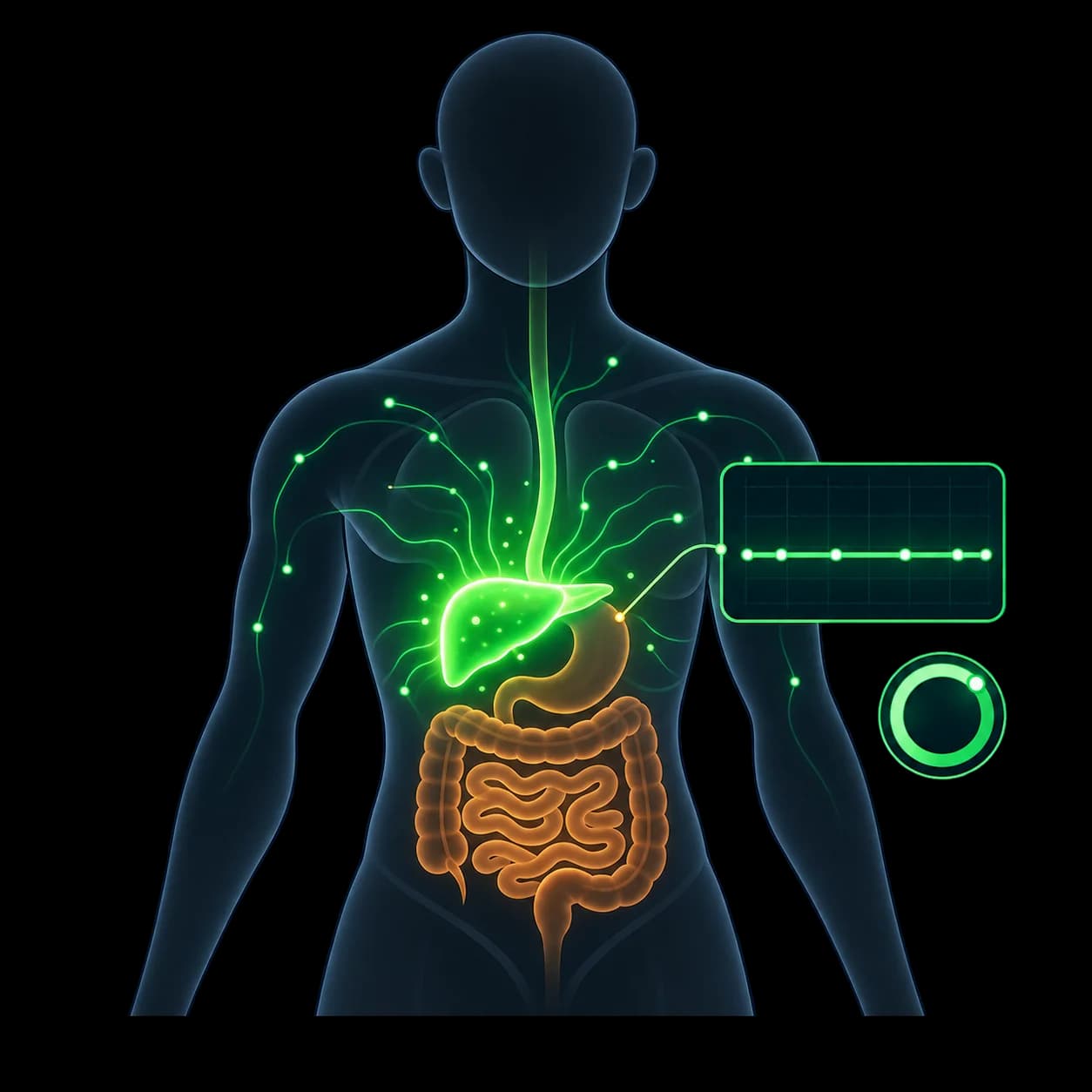
Fat Burning
Often around 11 hours into your fast
With less incoming energy and lower insulin, your body may rely more on stored fat while liver glycogen continues helping maintain blood sugar.
Source
Fat cells release fatty acids, which many tissues can use for energy during fasting.
This is a gradual metabolic shift, not an instant switch; the exact timing depends on your prior meals, activity, and metabolism.
Some people feel hunger ease as they adapt, while others may still feel hungry. Both responses can be normal.
StatPearls (NCBI Bookshelf)Physiology, Fasting
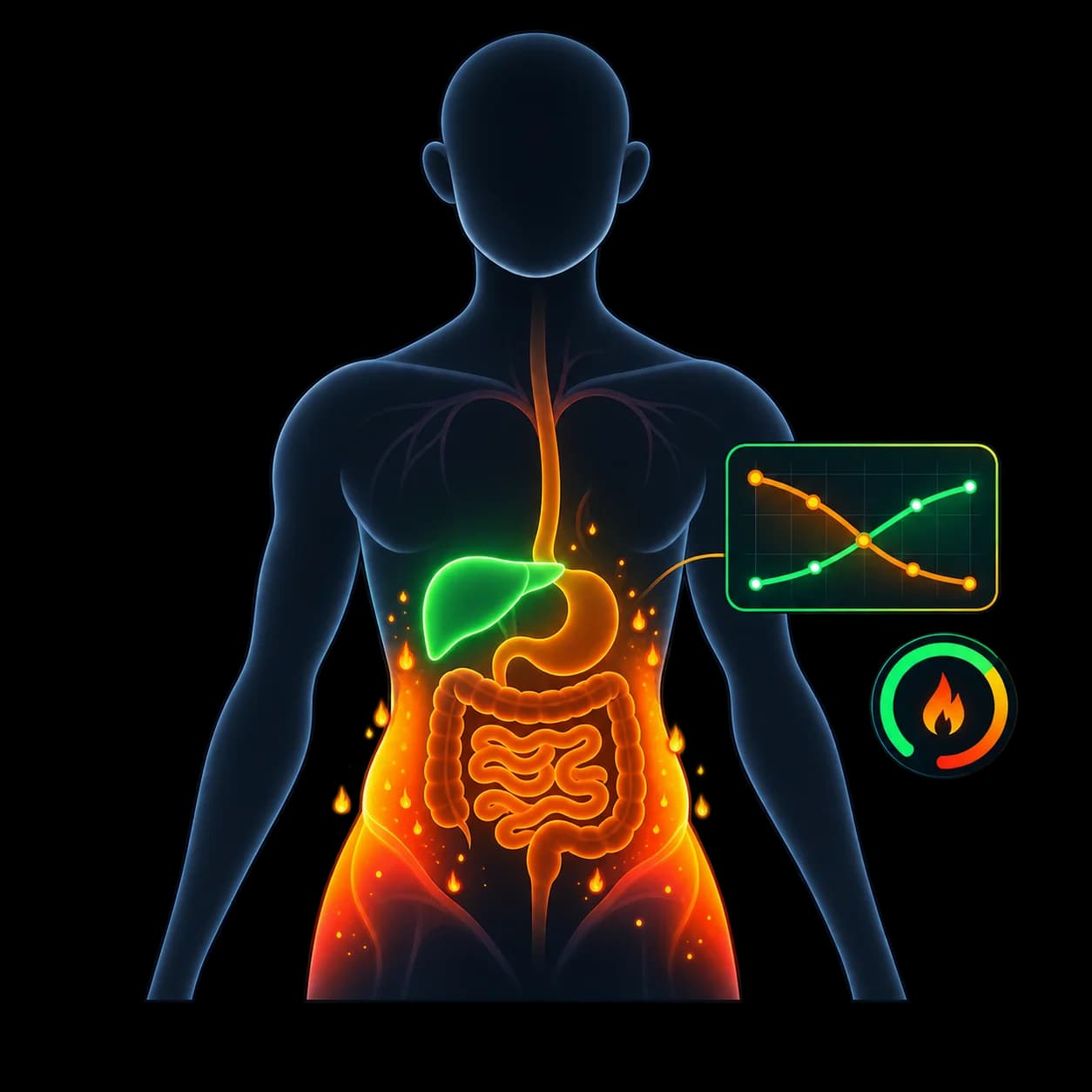
Ketones Begin Rising
Can start rising from about 12–14 hours into your fast
As fasting continues and insulin remains lower, the liver can make small amounts of ketones from fatty acids. Ketones may contribute more energy over time.
Source
This does not mean ketones are already your main fuel; early ketone levels are usually modest and vary by diet, activity, and metabolism.
Some people feel steadier energy or focus, but responses vary and are not guaranteed.
Fat use can continue increasing as fasting progresses, while your body still maintains blood glucose through liver glucose production.
de Cabo R, Mattson MP - New England Journal of MedicineEffects of Intermittent Fasting on Health, Aging, and Disease. N Engl J Med 381:2541–2551
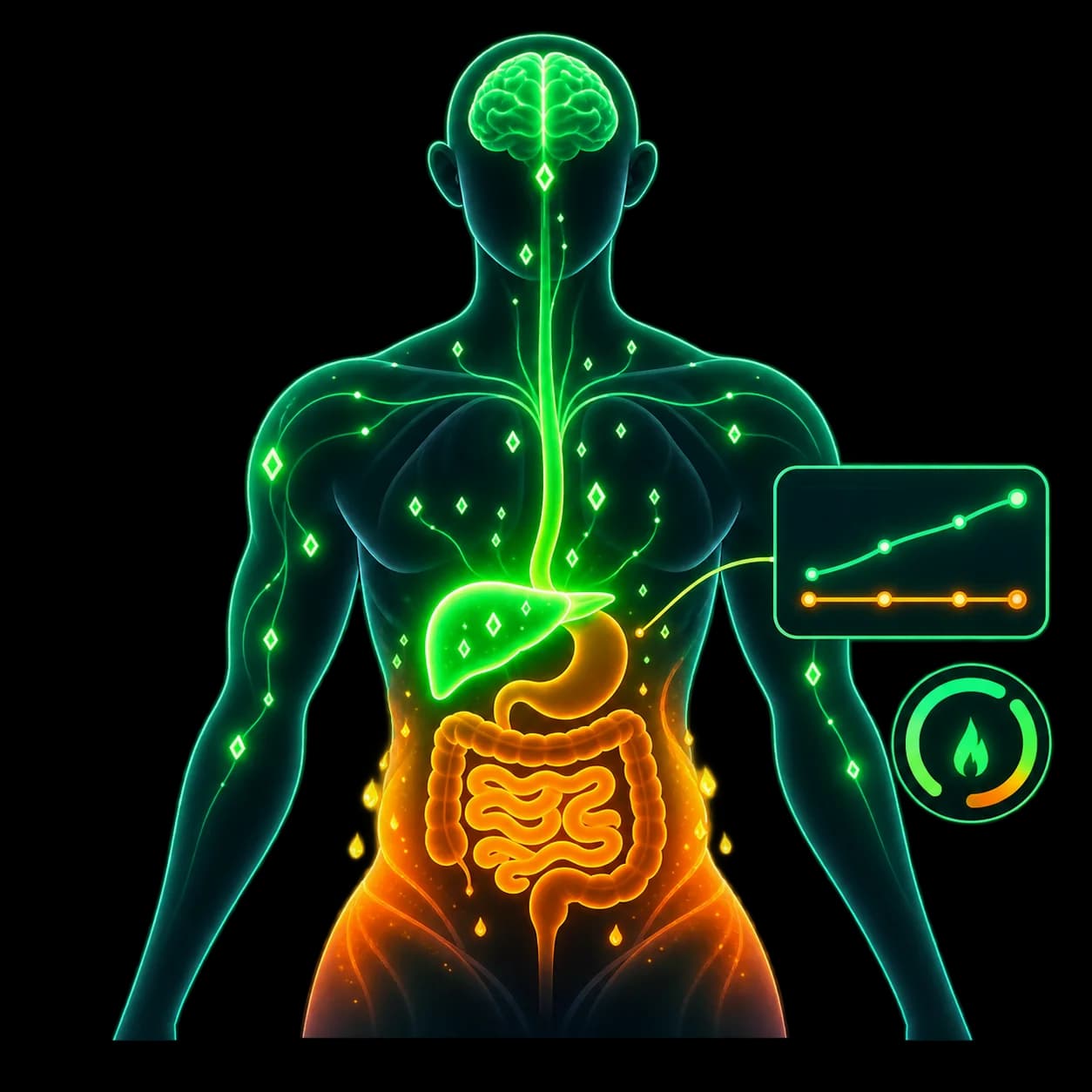
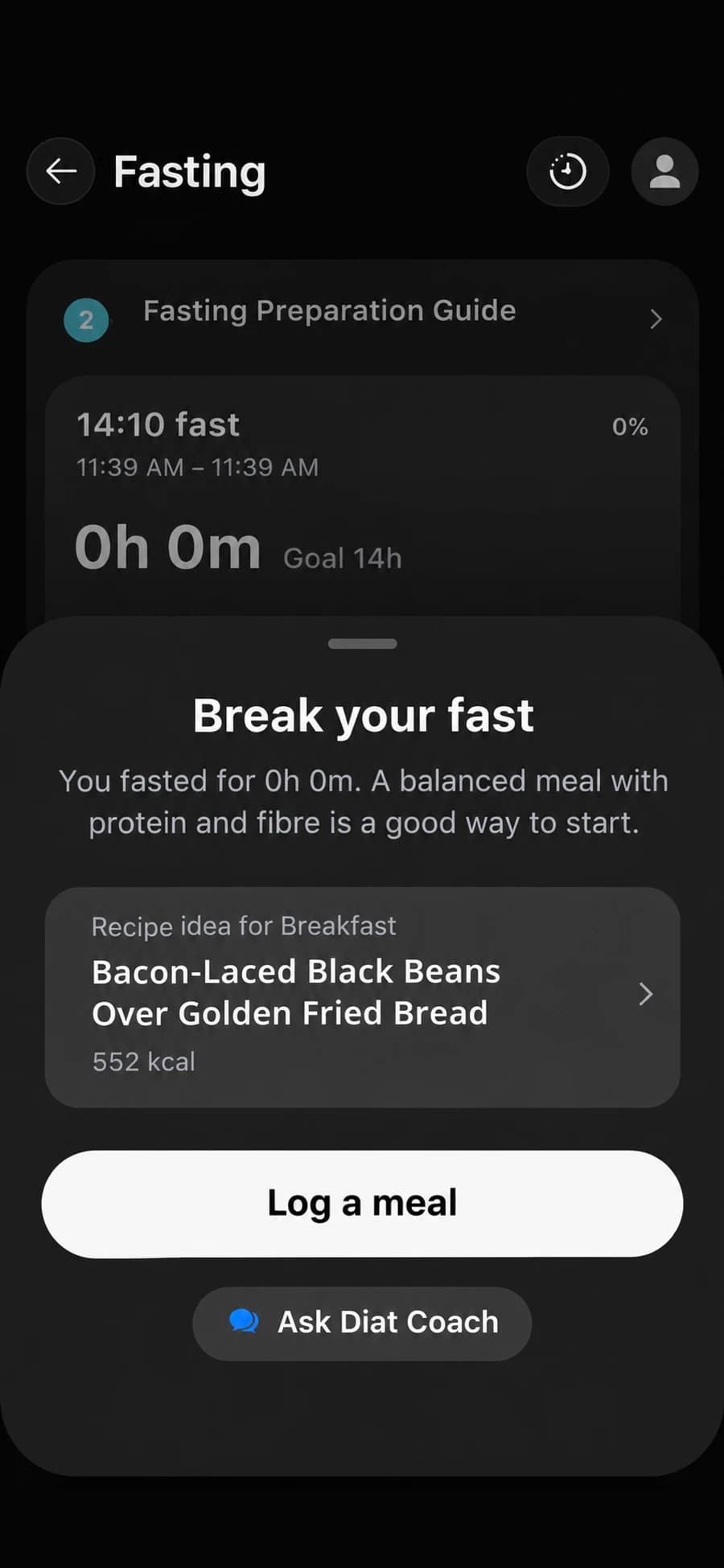
Log the meal that breaks your fast.
Take a photo of your meal or search for what you ate. Track it in the same app you use for fasting.
See how food logging worksIn actionA little look at your daily rhythm
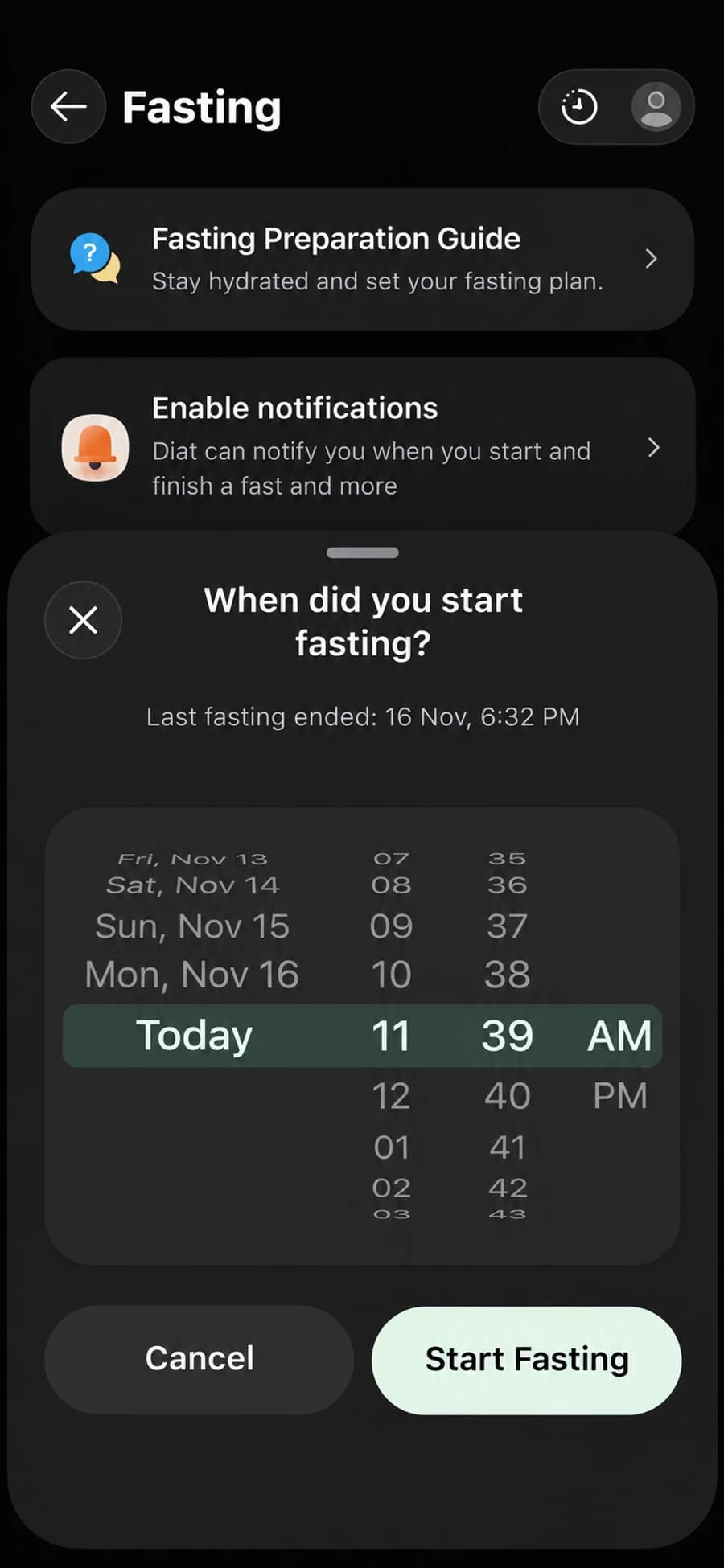
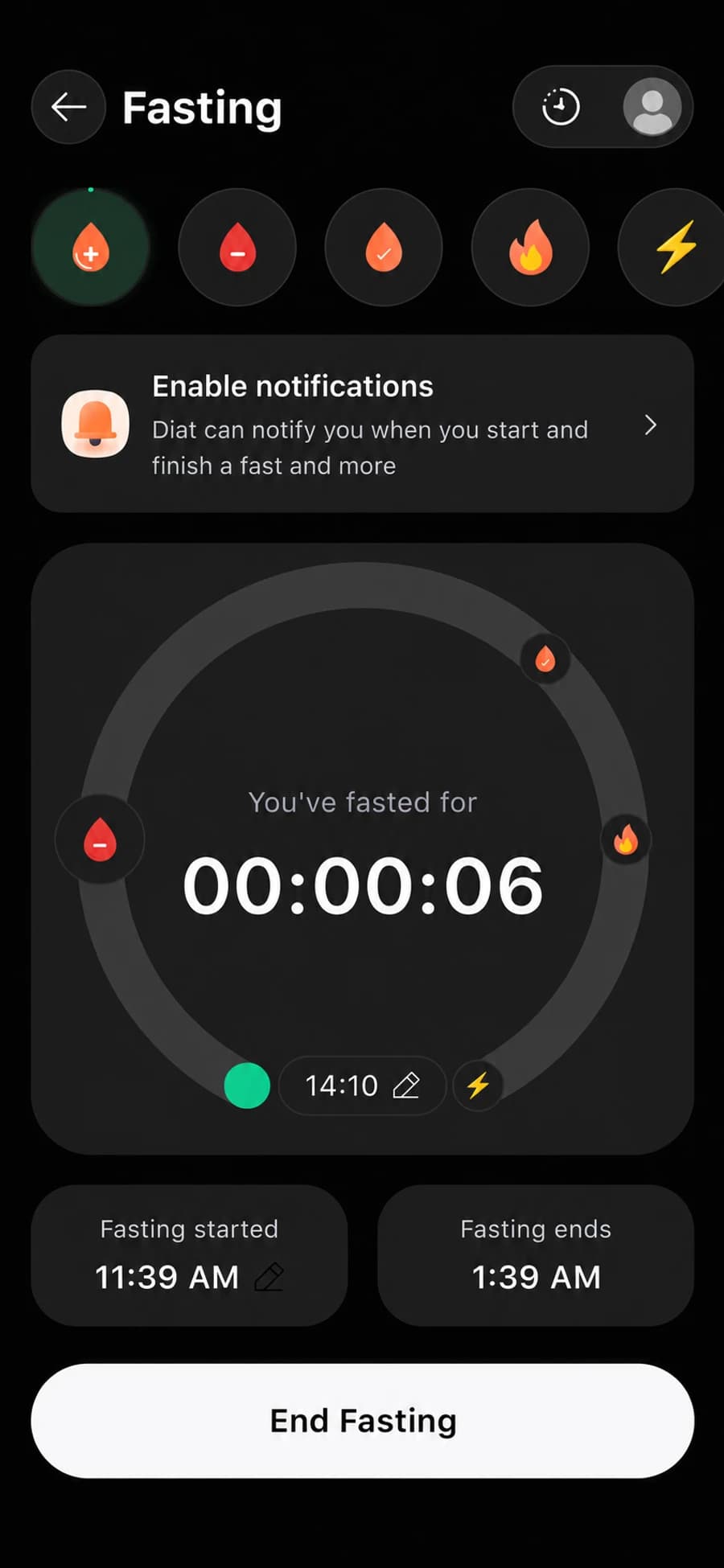
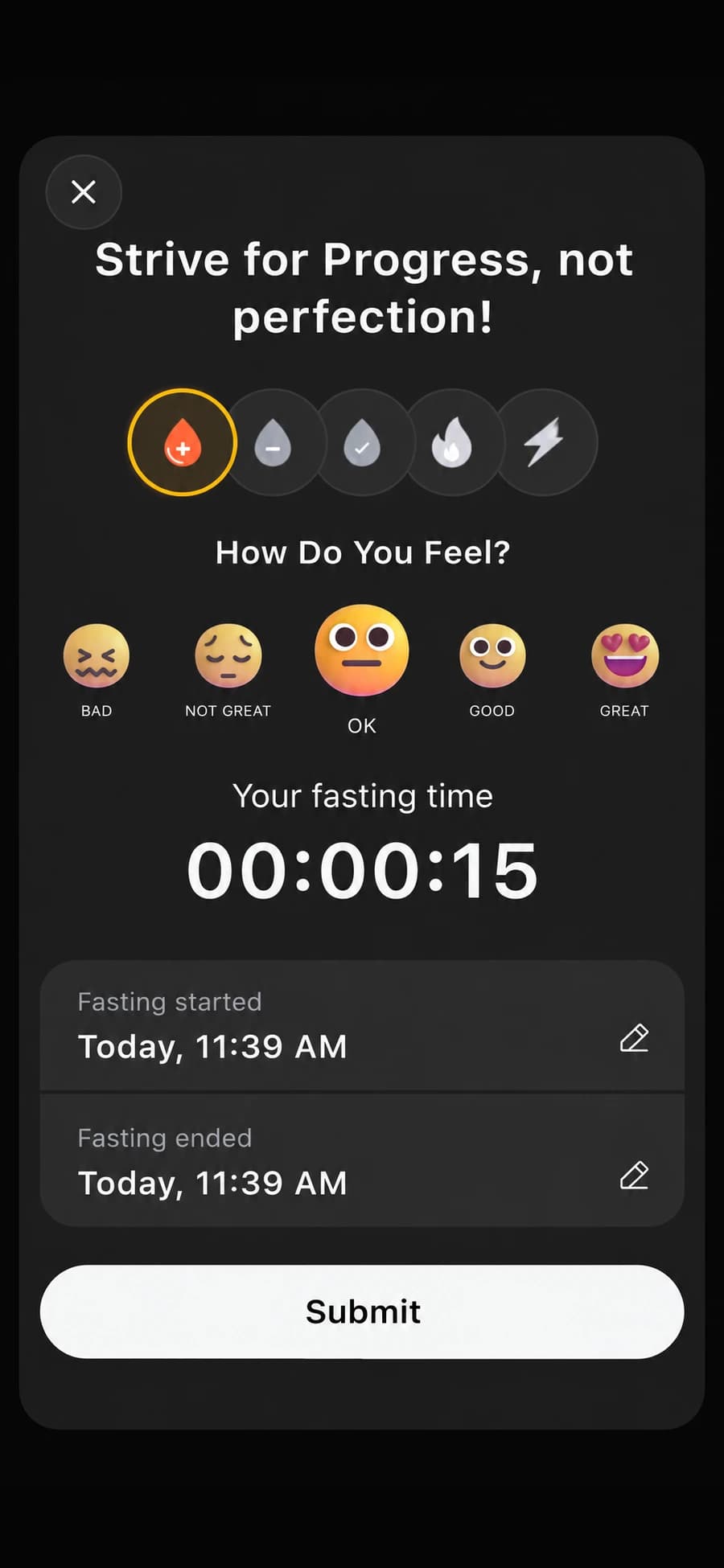
Diat PlusSee the pattern beyond today
Get fat-burning and autophagy alerts, expert fasts of 21 to 23 hours, custom plans and your fasting patterns. Hour markers do not confirm a metabolic state or promise a health benefit.
Explore Diat Plus
Autophagy Activated
Cellular renewal has begun - your body is healing itself!
Fat Burning Activated
Your body is now burning fat as fuel - keep going!
Find your starting pointA rhythm for your routine

Starting with 14:10
Explore a gentler example window before choosing a routine.

Already on 16:8
Keep your 16:8 intermittent fasting timer and your food log together.

Tracking calories too
See your meals alongside your eating window.

Making room for training
Consider your meals and workouts together when choosing a window.
Get started
How to start intermittent fasting with Diat
Download Diat for free
Get Diat on the App Store or Google Play and tell it your goal. Diat suggests a free plan to start with.
Pick your window
Choose 14:10, 16:8, 18:6 or 20:4 and the time your fast starts. Each plan shows its weekly schedule first.
Follow the timer
Keep the live timer on your lock screen and get reminders before your fast starts and before it ends.
Break your fast and review
Log the meal that breaks your fast, record how you felt, and watch your streaks and history build up.
One app instead of two
| Feature | Typical fasting timer app | Typical calorie counter | Diat |
|---|---|---|---|
| Fasting timer with 16:8 and other plans | Yes | Sometimes | Yes |
| Reminders and lock-screen timer | Yes | Sometimes | Yes |
| Food logging by photo | No | Sometimes | Yes |
| Calorie and macro tracking | Sometimes | Yes | Yes |
| Fasting history, streaks and how you felt | Yes | Sometimes | Yes |
| Coach that plans fasts around training | Sometimes | Sometimes | Yes |
| Core fasting timer free | Sometimes | Sometimes | Yes |
Before you startFasting is not for everyone
If you are under 18, pregnant or breastfeeding, have a history of disordered eating, have diabetes or take medication affecting blood sugar, talk to a doctor before considering fasting. This is general information, not medical advice.
Your fasting questions, answered
Is the fasting timer free?
Yes. The free timer covers 12 to 20 hour fasts, including 14:10, 16:8, 18:6 and 20:4, next to your food log, and each plan shows its weekly schedule before you start. Expert fasts of 21 to 23 hours, custom plans with your own name, colour and fasting days, fat-burning and autophagy alerts and fasting patterns are part of Diat Plus.
Which plan should I start with?
Diat suggests one from your goal. Losing weight quickly suggests 18:6, at the recommended pace 16:8 and slowly 14:10. Maintaining your weight or building muscle suggests 14:10. The suggestion is always a free plan, and you can change it any time.
Do I get fasting reminders?
Yes. Free reminders arrive before your fast starts and before it ends, and a live timer shows on your lock screen. Diat Plus adds fat-burning and autophagy alerts at 11 and 16 hours. These are time markers, not measurements of your metabolism. Water and meal reminders work alongside it, and the fasting screen shows when your next fast starts.
Can I end or edit a fast?
Yes. Turn on Auto Tracking in your plan and Diat ends the fast for you. If you stop before your goal, Diat checks in first so you can resume, or stop and save it. You can also edit start and end times, or add a fast you forgot to track.
Can I see and share my progress?
Yes. Fasting insight shows every fast on a calendar, your current and longest streak, goal hit rate, goal vs. actual, how you felt and personal records like your longest fast. Diat Plus adds patterns from your last 30 days. After a fast you can share a card to the Community feed, and Share your day adds your fasting streak to your daily report.
Can I change my window on training days?
Yes. Ask Pip to plan fasts around your training and late dinners, or build a custom plan with Diat Plus and choose which days you fast.
What is the best free intermittent fasting app?
It depends on what you want to track. If you want a fasting timer and a food log in one place, Diat is free for 12 to 20 hour fasts (14:10, 16:8, 18:6 and 20:4) with reminders, a lock-screen timer, fasting history and photo food logging. If you only want a bare timer with nothing else, any simple timer app will do.
What are the stages of fasting?
As a rough guide: blood sugar rises after you eat, starts returning to normal about 2 to 3 hours later, is held steady by stored glycogen around 9 hours, fat use often increases around 11 hours, and ketones can start rising from about 12 to 14 hours. Timings are estimates and vary from person to person.
Does Diat count calories as well as fasting?
Yes. Diat is also a calorie counter: log the meal that breaks your fast from a photo or a search and see your meals next to your eating window, in the same app.