Diat is a wellness and food tracking tool, not a medical device. This content is for informational purposes only and does not replace professional medical advice, diagnosis, or treatment. Always consult a healthcare provider or registered dietitian before making significant changes to your diet.
You researched the ideal macro percentage for weight loss, used an online calculator to find your targets, and mapped out a week of meals. On Monday, you logged everything perfectly. By Wednesday, you ate a mixed-bowl salad for lunch, couldn’t figure out how to enter a homemade dressing, and stopped logging entirely.
If this cycle feels familiar, the issue isn't your discipline. The issue is that manual food tracking is tedious, and perfectionism often gets in the way of consistency.
What are the best macros for weight loss in females?
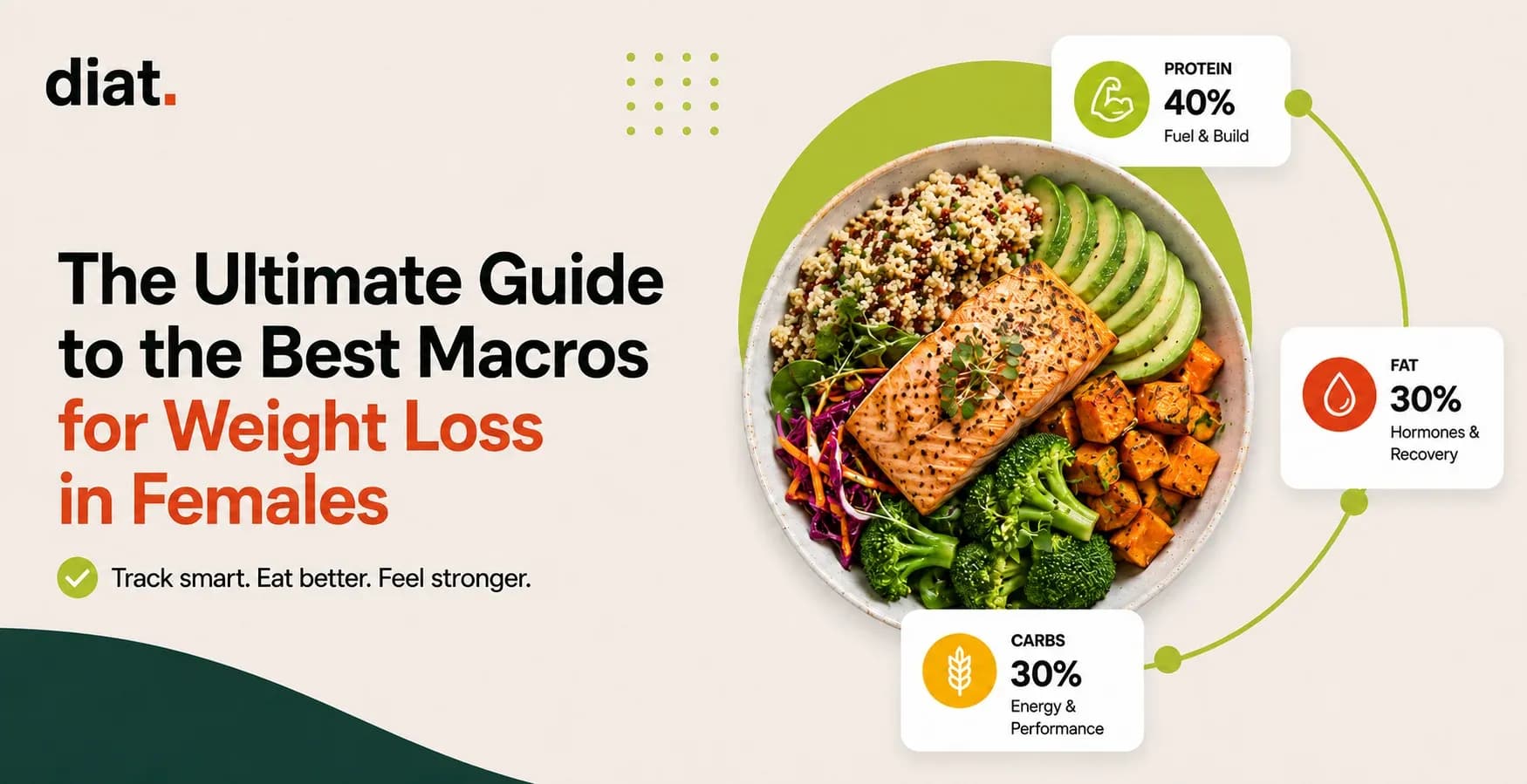
The Acceptable Macronutrient Distribution Range (AMDR) set by the Institute of Medicine suggests a baseline of 10–35% protein, 45–65% carbohydrates, and 20–35% fats. However, for women focusing on weight loss, a common starting breakdown is 30% protein, 40% carbohydrates, and 30% fat. This higher protein ratio helps preserve lean muscle mass while you maintain a calorie deficit.
Key Takeaways
- Protein is the priority: Aiming for 25–30% protein helps manage hunger and preserve muscle during a calorie deficit.
- Carbs and fats are not the enemy: Both are required for energy and hormonal health; restricting them too aggressively often leads to burnout.
- Consistency beats precision: An approximate daily log of your meals is far more effective for long-term weight management than a perfect log you abandon after three days.
- AI tracking has limitations: Photo-based calorie estimates are approximations, best used for habit-building rather than gram-perfect budgeting.
- Consult a professional: Always speak to a healthcare provider before starting a calorie deficit or altering your macro split.
Why Macronutrients Matter for Women’s Weight Loss?
When people try to lose weight, they often focus solely on their total daily calories. While a calorie deficit is required for weight loss, where those calories come from your macronutrients dictates how you feel, how much energy you have, and whether you are losing body fat or muscle mass.

Every food you eat is made up of three primary macronutrients, each serving a specific physiological function.
Protein (4 calories per gram)
Protein is the building block of muscle, skin, and enzymes. When you reduce your calorie intake to lose weight, your body looks for energy. If you do not consume enough protein, your body may break down your muscle tissue instead of fat.
Furthermore, protein is highly satiating. According to clinical insights on nutrition, higher protein intake is associated with better satiety, meaning it keeps you feeling full longer, which makes sticking to a calorie deficit much easier.
Carbohydrates (4 calories per gram)
Carbohydrates are your body’s preferred energy source. They fuel your brain, your daily activities, and your workouts. While very low-carb diets are popular, severely restricting carbohydrates can lead to fatigue, brain fog, and poor exercise performance. Instead of cutting carbs entirely, the focus should be on complex carbohydrates—like oats, quinoa, and vegetables which provide sustained energy and essential dietary fiber.
Fats (9 calories per gram)
Fats are the most calorie-dense macronutrient, but they are absolutely essential for female health. Dietary fat is required for the absorption of fat-soluble vitamins (A, D, E, and K) and plays a critical role in hormone production and regulation. Dropping your fat intake too low can disrupt your menstrual cycle and negatively impact your mood.
Establishing Your Macro Percentage for Weight Loss
There is no single "best macros for fat loss" that applies universally to every woman. Your ideal breakdown depends on your age, activity level, and metabolic health. However, dietary guidelines and nutrition experts generally recommend shifting toward the higher end of the protein range when weight loss is the goal.
Here is a look at standard dietary recommendations versus a macro split optimized for weight loss:
Macronutrient | General AMDR Guidelines | Common Weight Loss Split | Function in a Calorie Deficit |
|---|---|---|---|
Protein | 10–35% | 30% | Preserves muscle, manages hunger, increases thermic effect of food. |
Carbohydrates | 45–65% | 40% | Provides training energy, supports thyroid function, prevents fatigue. |
Fats | 20–35% | 30% | Regulates hormones, aids nutrient absorption, adds flavor to meals. |
Note: The percentages above reflect general macronutrient ratios for weight loss, but they must be calculated against an appropriate calorie deficit to yield results.
Safety Note: Calorie restriction and strict macro tracking are not appropriate for everyone. Consult a registered dietitian or healthcare provider before changing your diet, particularly if you have a history of disordered eating, are pregnant or breastfeeding, or have underlying medical conditions. If you need support, organizations like the National Eating Disorders Association (NEDA) offer free resources.
Finding your target is only the first step. The real challenge is tracking it daily. Diat removes the friction of manual entry by letting you log meals with a single photo. It is free to download and start logging, with premium features via subscription.
The Tracking Problem: Why You Keep Quitting
If you have tried to hit specific macro goals for weight loss in the past, you likely hit a wall with tracking. Traditional barcode scanners are great for packaged foods, but they fail when it comes to real life.
If you make a stir-fry, traditional apps require you to weigh the chicken, measure the oil, weigh the broccoli, and search for the specific brand of soy sauce. It turns dinner into a math project. When tracking becomes a chore, people stop tracking. When they stop tracking, they lose awareness of their intake.
To build a sustainable habit, the method of tracking needs to fit into your actual lifestyle.
An Honest Note on AI Accuracy
This is where AI photo estimation comes in. By analyzing a photo of your plate, AI can estimate the visual volume of the food and map it against nutritional databases to provide a macro breakdown.
Is it 100% accurate? No. Current AI models cannot see how much butter you cooked your eggs in, and they cannot detect the sugar content of a restaurant dressing. AI estimates are approximations.
However, for exact precision down to the gram, manual entry remains the standard. But if the friction of manual entry causes you to quit by Wednesday, a consistent approximate log is always better than an empty perfect log. AI logging builds the habit, and the habit is what produces results over time.
How to Log Your First Meal in Diat
Diat is an AI calorie counter designed for people who want to track their macros without spending ten minutes staring at their phone after every meal. Whether you are tracking macros for building muscle or general weight management, you can log your food in seconds.
Here is how to track your meal:
- Open the App: Tap the camera icon on the main dashboard on your
- Snap a Photo: Point your camera at your meal. Try to ensure the whole plate is visible and well-lit so the AI can distinguish the different ingredients.
- Review the Breakdown: The AI will instantly generate an estimated list of ingredients, total calories, and your macro split (Protein, Carbs, and Fats).
- Confirm or Adjust: Review the results. If the AI estimate looks off—for instance, if it missed the avocado hidden under your salad—you can quickly edit the portions or add items manually.
Remember, getting the estimate close is far more useful than skipping the log altogether.
Stop letting the frustration of manual entry derail your week. Diat is free to download and start logging, with premium features via subscription.
Diat is a food tracking and wellness tool. It does not provide medical diagnoses or replace the advice of a physician or registered dietitian.
The best diet is the one you can actually stick to, and the best tracking method is the one you will actually use. Download Diat today and start building a better logging habit.