

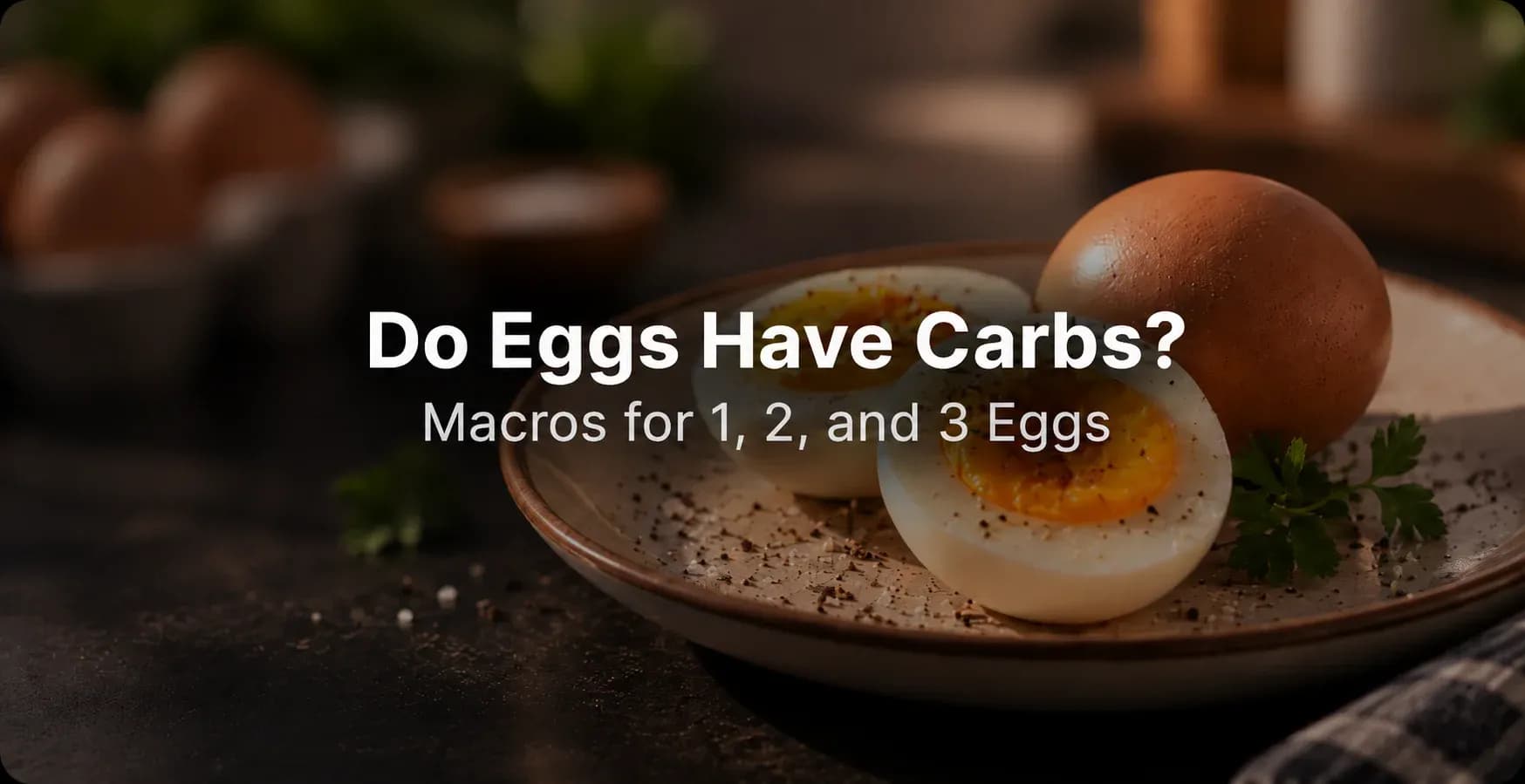
Eggs have almost no carbs — under 1 gram per large egg. A standard large egg contains about 0.6 grams of carbohydrates, alongside 6 grams of protein and 5 grams of fat.
That is why eggs sit at the center of keto, low-carb, and high-protein diets, and why "do eggs have carbs?" has a one-word answer: barely. But the longer answer depends entirely on what you cook them with.
Tracking your macros shouldn't take longer than making your breakfast. Diat's AI photo logging lets you snap a picture of your plate to instantly separate the zero-carb eggs from the carb-heavy toast. Free to download on the App Store and Google Play.
Macros in 1, 2, and 3 Large Eggs (Plain)
Based on USDA FoodData Central reference standards, here is the exact breakdown for plain, whole eggs.
Quantity | Calories | Carbs | Protein | Fat |
|---|---|---|---|---|
1 large egg | 72 kcal | 0.6 g | 6.3 g | 4.8 g |
2 large eggs | 143 kcal | 1.1 g | 12.6 g | 9.5 g |
3 large eggs | 215 kcal | 1.7 g | 18.9 g | 14.3 g |
Values for a large egg (~50 g without shell). Medium eggs have about 15% fewer calories; extra-large have about 15% more.
Where the Carbs Are?
The tiny amount of carbohydrate in an egg is split roughly equally between the white and the yolk, existing as trace sugars. There is no fiber and no starch.
- Egg whites alone: A large egg white has about 0.2 g carbs, 3.6 g protein, and 17 calories.
How Cooking Changes the Macros
The egg itself does not change; what you add does. Most tracking fatigue happens right here—trying to manually log the butter, the milk, and the cheese separately.
Preparation (2 eggs) | Calories | Carbs | Notes |
|---|---|---|---|
Boiled or poached | 143 | 1.1 g | Nothing added. |
Fried in 1 tsp oil | 185 | 1.1 g | +40 kcal from oil, no carbs. |
Scrambled (1 tbsp milk, 1 tsp butter) | 195 | 1.8 g | Milk adds ~0.7 g carbs. |
Scrambled with 30 g cheddar | 265 | 1.5 g | Cheese adds fat and protein, almost no carbs. |
Omelette with 30 g cheese, veggies | ~290 | 4–6 g | Carbs come entirely from the vegetables. |
Two eggs on 1 slice whole-grain toast | ~225 | 14 g | The toast is the carbohydrate source. |
The pattern is clear: eggs plus fat (oil, butter, cheese) stay low-carb. Eggs plus bread, potatoes, beans, or ketchup are where the carbs come from. A single tablespoon of ketchup alone contains about 4 g of carbs.
Are Eggs Keto?
Yes. At under 1 g of carbs each, you could eat a dozen and stay well under 10 g. Standard keto limits sit between 20 and 50 g of net carbs per day.
Safety Note: Fasting protocols and strict calorie or carbohydrate restriction methods like keto are not appropriate for everyone. This includes people with a history of disordered eating, pregnant or breastfeeding individuals, and adolescents. Always consult a healthcare provider or registered dietitian before starting a restrictive diet.
Protein: The Number That Matters More
Most people asking about carbs in eggs are tracking macros, and for eggs, the useful number is protein: 6 g per egg, complete with all nine essential amino acids. Three eggs at breakfast provide 19 g of protein — a reasonable start toward a 130–160 g daily target, though you may want to add Greek yogurt, cottage cheese, or smoked salmon to hit a full 30–40 g meal.

How to Track Your Breakfast in Diat?
Logging a mixed breakfast manually usually requires four separate database searches (eggs, butter, toast, ketchup). Diat's photo-logging feature skips the typing.
- Open Diat and tap "Log Meal."
- Snap a photo of your finished plate.
- Review the estimate. The AI analyzes the image, separating the eggs from the toast and condiments to estimate your total calories and macros.
- Confirm or adjust.
Note on accuracy: AI estimates are approximations. Third-party testing shows photo AI is generally 80–85% accurate for mixed dishes. If the AI misses the cooking oil or misjudges the toast size, you can adjust portions manually. Getting close consistently is more useful for long-term tracking than agonizing over perfect database entries.
