

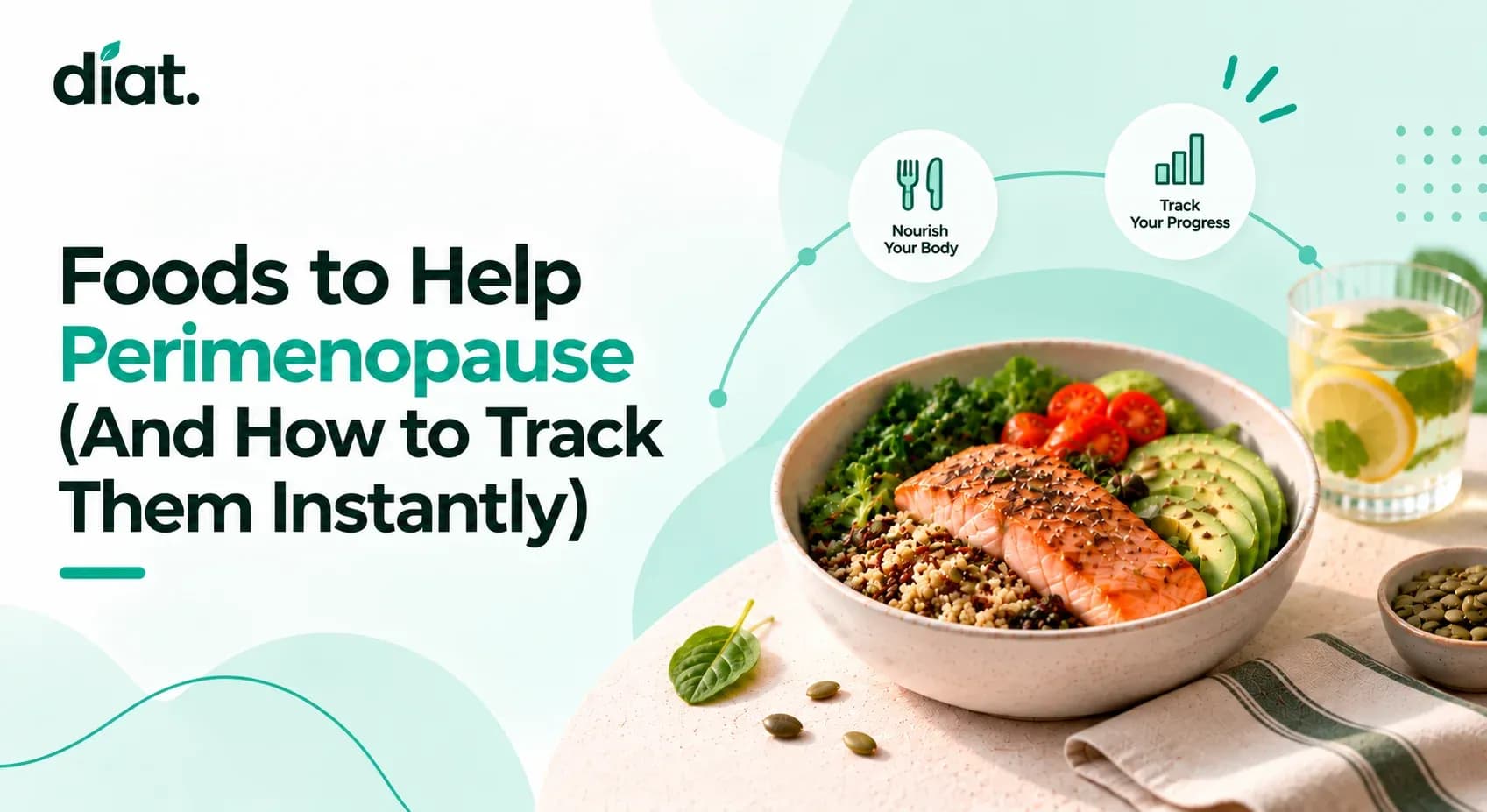
Navigating perimenopause often feels like your body has changed the rules without giving you the new playbook. Foods that used to leave you energized might suddenly trigger hot flashes, and maintaining muscle mass requires more intentional effort. The best foods to help perimenopause focus on stabilizing blood sugar, preserving bone density, and managing inflammation: prioritize phytoestrogen-rich foods (like edamame and flaxseeds), high-quality proteins, and calcium-dense greens.
But knowing what to eat is the easy part. Consistently tracking if you are hitting these new nutritional targets is where most people quietly give up. That’s where Diat steps in: snap a photo of your meal, and the AI instantly estimates your macros.
Safety Note: Tracking food intake and utilizing calorie deficits or fasting protocols is not appropriate for everyone. Individuals with a history of disordered eating, pregnant or breastfeeding women, and those with specific medical conditions should consult a healthcare provider before beginning any tracking regimen. If you or someone you know is struggling with an eating disorder, professional support resources are available.
Download Diat now to start tracking your calories now!
What Is Perimenopause?
Perimenopause is the natural transitional phase leading up to menopause. During this window, your ovaries gradually produce less estrogen. According to the National Health Service (NHS), this phase usually begins in your early to mid-40s and can last for several years before your periods stop entirely.
These hormonal fluctuations trigger noticeable physical shifts, including hot flashes, sleep disruptions, and changes in how your body stores fat. Because estrogen directly influences your metabolism and bone density, adjusting your daily nutrition is a practical way to support your body as it changes.
Why Your Nutrition Needs Shift During Perimenopause?
During perimenopause, fluctuating estrogen levels impact how your body processes carbohydrates, stores fat, and maintains bone density. According to recent clinical reviews on menopause and nutrition (PMC10780928), the decline in estrogen is associated with an increased risk of metabolic changes.

You don't need a restrictive diet; you need a strategic one. You need to ensure adequate protein to combat age-related muscle loss, sufficient fiber to support gut health and estrogen excretion, and calcium to protect your bones.
Tracking these changes manually in a traditional app often leads to logging fatigue. Diat’s photo-logging is designed for the moments when you don’t have time to search a database, snap your plate, confirm the breakdown, and move on. Free to download!
The Perimenopause Nutrition Breakdown
When evaluating foods to help with perimenopause, aim for nutrient density. Here is how standard perimenopause nutritional targets compare to typical dietary habits, and how you can spot them on your plate.
Nutrient Focus | Why It Matters Now | Top Food Sources | Foods to Limit (Triggers) |
|---|---|---|---|
Protein | Combats anabolic resistance and preserves lean muscle mass. | Greek yogurt, chicken breast, tofu, lentils, salmon. | Highly processed meats with excess sodium. |
Phytoestrogens | Plant compounds that weakly mimic estrogen; associated with reduced hot flashes. | Edamame, tempeh, flaxseeds, sesame seeds. | Relying solely on highly processed soy isolates. |
Calcium & Vitamin D | Protects against accelerated bone density loss as estrogen drops. | Leafy greens, fortified plant milks, sardines, dairy. | Excess caffeine or alcohol, which can inhibit absorption. |
Fiber | Stabilizes blood sugar and aids in hormone metabolism. | Chia seeds, oats, berries, beans, cruciferous vegetables. | Refined carbohydrates and added sugars. |
Note: Nutritional needs are highly individual. Consult the British Dietetic Association (BDA) guidelines or a registered dietitian to determine your specific macro targets.
Your Perimenopause Grocery Checklist
To make hitting those nutritional targets easier, base your weekly meals around these whole foods.
Lean Proteins (Muscle Preservation):
- Greek yogurt or cottage cheese
- Chicken or turkey breast
- Salmon or mackerel (also high in omega-3s)
- Lentils and chickpeas
Phytoestrogens (Hormone Support):
- Edamame (whole soybeans)
- Tempeh or firm tofu
- Ground flaxseed (store in the fridge to protect the oils)
- Sesame seeds
Bone-Supporting Minerals (Calcium & Magnesium):
- Dark leafy greens (kale, spinach, collards)
- Sardines (eaten with the bones)
- Calcium-fortified unsweetened plant milks
- Almonds
High-Fiber Carbohydrates (Blood Sugar Stability):
- Chia seeds
- Steel-cut or rolled oats
- Berries (raspberries and blackberries are highest in fiber)
- Broccoli and Brussels sprouts
Because Diat's AI scanner is highly accurate at identifying whole, single-ingredient foods, building your meals from this checklist means your photo-logging will be fast and reliable. Free to download.
How to Track Perimenopause Macros in Diat
If your goal is to hit 1.0-1.2 grams of protein per kilogram of body weight (a common recommendation for women in their 40s and 50s), guessing won't work. Here is how to verify your plate in under ten seconds:
- Open the App: Open Diat on your phone
- Snap the Plate: Tap "Log Meal" and take a clear photo of your food.
- Review the Breakdown: The AI will instantly analyze the image, estimating the calories and providing a breakdown of your macros.
- Confirm or Adjust: If the AI misses a hidden ingredient, like the olive oil you used to roast your vegetables, you can adjust the entry manually.
Getting close and building the habit is more useful than not logging at all.
An Honest Note on AI Photo Tracking
AI photo-based calorie and macro estimation is a powerful tool for building consistency, but it is not flawless. AI estimates are approximations. The technology excels at identifying whole, single-ingredient foods, like a piece of salmon or a handful of almonds, but it may struggle to accurately gauge hidden fats, cooking oils, or the exact composition of complex mixed sauces.
Use Diat to build logging habits, spot macro trends over the week, and ensure you are generally hitting your protein and fiber goals, rather than treating the numbers as a flawless, precise calorie budget.
