

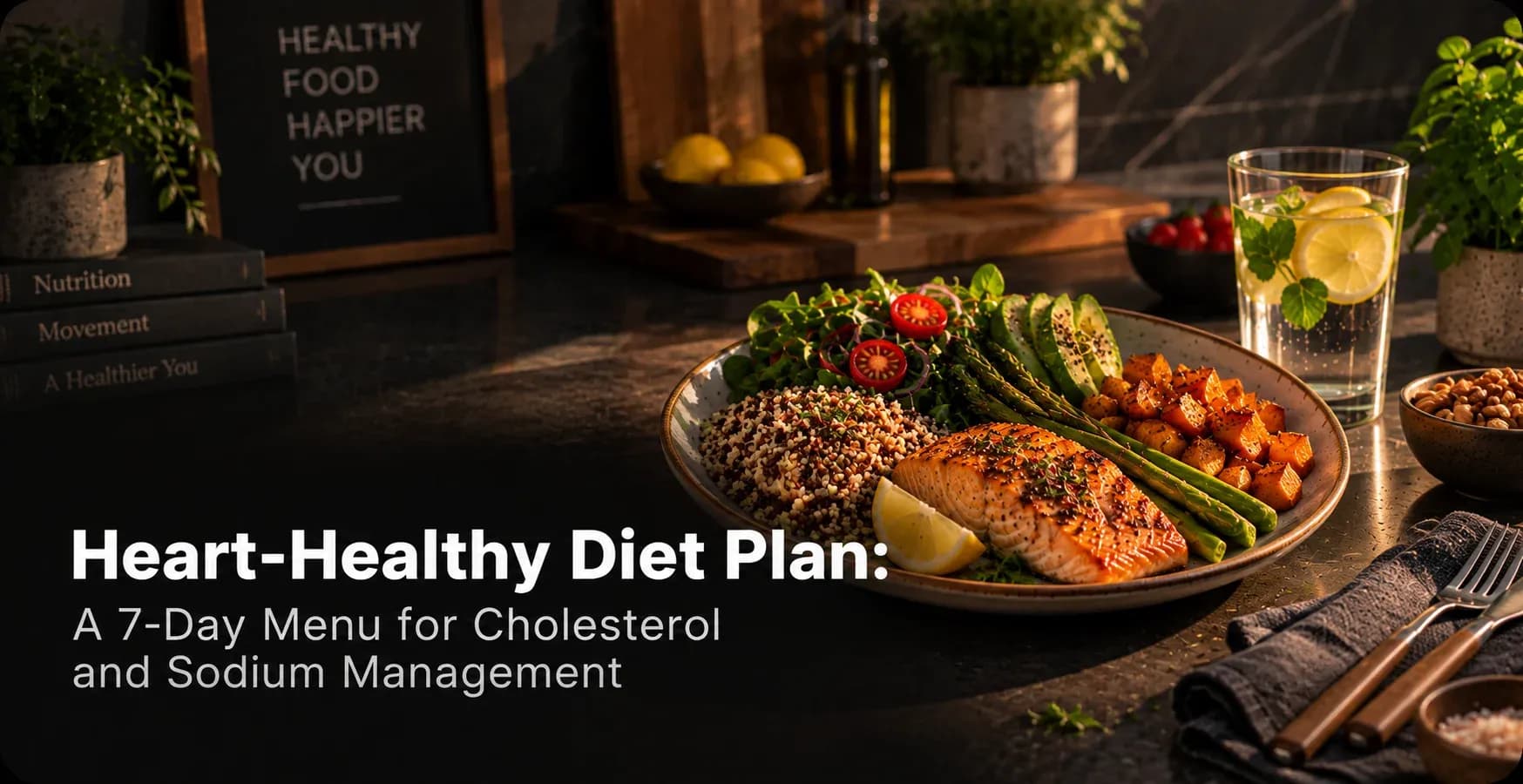
What is a heart-healthy diet plan?
A heart-healthy diet plan focuses on vegetables, whole grains, lean proteins, and healthy fats while strictly limiting sodium, saturated fats, and processed meats. Built on the DASH and Mediterranean eating patterns, it is designed to manage blood pressure and lower cholesterol.
Disclaimer: Diat is a food tracking and wellness tool, not a medical device. This 7-day plan is for general educational purposes and does not replace the advice of a healthcare professional, registered dietitian, or physician. If you have a heart condition, high blood pressure, or take medication, consult your clinician before making dietary changes.
You know you need to watch your sodium and saturated fat. Maybe your doctor mentioned a cardiac diet plan, or you are managing your cholesterol. But knowing what to eat and actually tracking it are two different things. Most people give up on tracking because logging every ingredient manually takes too much time.

Diat exists to remove that friction. It analyzes your meals from a single photo, estimating calories and baseline macros so you can focus on building sustainable habits. Free to download, with premium via subscription.
Table 1: Common High-Sodium Foods & Heart-Healthy Swaps
High-Sodium Item | Heart-Healthy Swap |
|---|---|
Packaged deli meats (turkey, ham) | Sliced, home-roasted chicken breast |
Standard canned soups | Low-sodium or "no salt added" tinned soups |
White bread and wraps | Whole-grain bread (check labels for <120 mg sodium per 100g) |
Table salt / seasoning salt | Lemon juice, fresh garlic, black pepper, and herbs |
The Core Guidelines
The two diets with the strongest evidence for cardiovascular health — the DASH diet and the Mediterranean diet — agree on the fundamentals. They are not restriction diets; they are long-term eating patterns.
Targets to hit:
- Vegetables and fruit: 5+ servings a day.
- Fibre: 25–30 g a day. According to the American Heart Association (AHA), soluble fibre actively helps manage cholesterol levels.
- Healthy fats: Olive oil as the primary fat; oily fish (salmon, mackerel) twice a week; nuts and seeds daily.
Limits to manage:
- Sodium: Under 2,300 mg a day. The AHA suggests 1,500 mg as the ideal limit for most adults. Most sodium comes from packaged foods and restaurant meals, not the salt shaker.
- Saturated fat: Under 6% of your daily calories (about 12 g on an 1,800-calorie diet), limiting fatty meats and full-fat dairy.
Table 1: Daily Cardiovascular Nutrition Targets
(Based on American Heart Association guidelines)
Nutrient | Daily Target | Why It Matters for Heart Health |
|---|---|---|
Sodium | Under 1,500 mg (ideal) or 2,300 mg (maximum) | Helps manage and lower blood pressure |
Saturated Fat | Less than 6% of total calories (~12g on a 1,800 kcal diet) | Reduces LDL (bad) cholesterol levels |
Dietary Fibre | 25 to 30 grams | Soluble fibre actively binds to cholesterol to remove it |
Added Sugars | Under 25g (women) / 36g (men) | Reduces triglyceride levels and inflammation |
Safety Note: Calorie tracking and dietary restriction are not appropriate for everyone. Pregnant individuals, children, and those with a history of disordered eating should avoid strict tracking. Always consult a healthcare provider before starting a calorie deficit or restrictive meal plan.
The 7-Day Heart-Healthy Meal Plan
This plan averages 1,600–1,800 calories and stays under 2,000 mg of sodium per day. Portion notes: "1 serving" of grains is about ½ cup cooked. Use lemon, garlic, and vinegar instead of salt.
Day 1
- Breakfast: Oats (40 g) in low-fat milk, sliced banana, 1 tbsp walnuts. (380 kcal)
- Lunch: Lentil soup (low-sodium), 1 slice whole-grain bread, side salad with olive oil. (450 kcal)
- Dinner: Baked salmon (120 g), ½ cup quinoa, roasted broccoli and carrots. (560 kcal)
- Snacks: Apple; plain low-fat yoghurt with berries. (250 kcal)
Day 2
- Breakfast: 2 scrambled eggs, spinach, tomato, 1 slice whole-grain toast. (340 kcal)
- Lunch: Chickpea salad with feta (30 g), olive oil, lemon; wholemeal pitta. (520 kcal)
- Dinner: Chicken breast (120 g) stir-fried with peppers and ginger, low-sodium soy, ¾ cup brown rice. (580 kcal)
- Snacks: Orange; unsalted almonds. (230 kcal)
Day 3
- Breakfast: Greek yoghurt (low-fat), 30 g muesli, strawberries. (350 kcal)
- Lunch: Low-sodium canned tuna on whole-grain bread; cherry tomatoes. (430 kcal)
- Dinner: Vegetarian chilli (beans, tomatoes, cumin) with ½ avocado, ½ cup brown rice. (600 kcal)
- Snacks: Pear; carrot sticks with hummus. (220 kcal)
Day 4
- Breakfast: Overnight oats, chia seeds, blueberries. (390 kcal)
- Lunch: Leftover vegetarian chilli. (500 kcal)
- Dinner: Grilled mackerel (120 g), new potatoes, green beans, tomato salad. (580 kcal)
- Snacks: Banana; plain yoghurt. (230 kcal)
Day 5
- Breakfast: Whole-grain toast with mashed avocado and a poached egg. (400 kcal)
- Lunch: Quinoa bowl: sweet potato, black beans, spinach, lime. (520 kcal)
- Dinner: Turkey meatballs in homemade tomato sauce, whole-wheat spaghetti. (600 kcal)
- Snacks: Grapes; unsalted mixed nuts. (260 kcal)
Day 6
- Breakfast: Smoothie: low-fat milk, berries, ½ banana, flaxseed, oats. (380 kcal)
- Lunch: Leftover turkey meatballs and spaghetti. (550 kcal)
- Dinner: Baked cod with herb crust, roasted Mediterranean vegetables, couscous. (540 kcal)
- Snacks: Apple with peanut butter (no added salt). (200 kcal)
Day 7
- Breakfast: Porridge with grated apple, cinnamon, pumpkin seeds. (370 kcal)
- Lunch: Homemade minestrone soup, cannellini beans, whole-grain bread. (430 kcal)
- Dinner: Roasted chicken thigh (skinless), ½ cup barley, steamed kale. (600 kcal)
- Snacks: Orange; low-fat yoghurt with honey. (240 kcal)
Tracking 21 meals a week manually is exhausting. Diat's photo logging is designed for the moments when you don't have time to search a database — snap, confirm, move on. Free to download with premium via subscription.
How to Log Your Heart-Healthy Meals in Diat
Follow the simple steps to log your heart-healthy meals via Diat.
- Snap the Plate: Open Diat on and tap "Log Meal." Point your camera at your salmon and quinoa.
- Review the Estimate: The AI will estimate the calories and macronutrients (protein, carbs, fats) based on portion size and ingredient density.
- Adjust the Sodium: Honest accuracy note: AI estimates are approximations. A camera cannot taste salt or hidden butter in restaurant food. For strict cardiovascular limits, use Diat's photo tool to capture the bulk calories and macros quickly, then manually check labels for high-sodium additions like sauces, cheese, or dressings.
Getting a close estimate consistently is more useful than demanding perfect precision and quitting on day four.
Feature | Manual Database Search | Diat AI Photo Logging |
|---|---|---|
Speed | 2–4 minutes per mixed meal | Under 15 seconds |
Friction | High (leads to logging fatigue) | Low (promotes daily habit) |
Accuracy | High (if weighed precisely) | Approximate (best for whole foods) |
Sodium Tracking | Manual label entry required | AI estimates base ingredients; manual checks needed for added salt |
The fastest way to test any food-tracking approach is to use it for one week. Diat is free to download, with premium available via subscription.
