
You drank four glasses of water this morning, but you still feel sluggish, your head aches slightly, and your mouth is dry. You grab a brightly colored sports drink at the convenience store, hoping for a quick fix, only to realize later it contained more sugar than a can of soda. Hydration is more complex than just drinking water, but navigating the sports drink aisle often leaves people more confused than when they started.
What is a good electrolyte drink? A good electrolyte drink replaces the specific minerals your body loses through sweat, fasting, or illness—primarily sodium, potassium, and magnesium—without relying on excessive added sugars or artificial dyes. The best choice depends entirely on your current physiological state: a zero-sugar powder is ideal for intermittent fasting or a light workout, while an illness or intense endurance training requires a drink with carbohydrates to speed up cellular absorption.
Key Takeaways
- Context dictates the drink: An hour of weightlifting requires a completely different hydration strategy than recovering from a stomach bug or breaking a 16-hour fast.
- Sodium is the priority: Sodium is the primary electrolyte lost in sweat. Effective drinks usually contain between 200mg and 1,000mg per serving.
- Powder vs. Liquid: An electrolyte drink powder usually provides a vastly superior mineral-to-sugar ratio compared to pre-mixed convenience store drinks.
- AI tracking limitations: While Diat's AI photo logging is excellent for analyzing solid foods on a plate, AI cannot visually detect the dissolved sugar or sodium content in a clear liquid. Always manually log your specific electrolyte brand.
1. What Are Electrolytes and Why Do You Need Them?
Electrolytes are essential minerals that carry an electric charge when dissolved in fluid. They are the chemical messengers that allow your brain to communicate with your muscles. According to the National Institutes of Health (NIH), electrolytes regulate nerve and muscle function, hydrate the body, balance blood acidity, and help rebuild damaged tissue.

When you sweat, use the restroom, or simply breathe, you lose water and these charged minerals. When evaluating a drink label, look for these critical components:
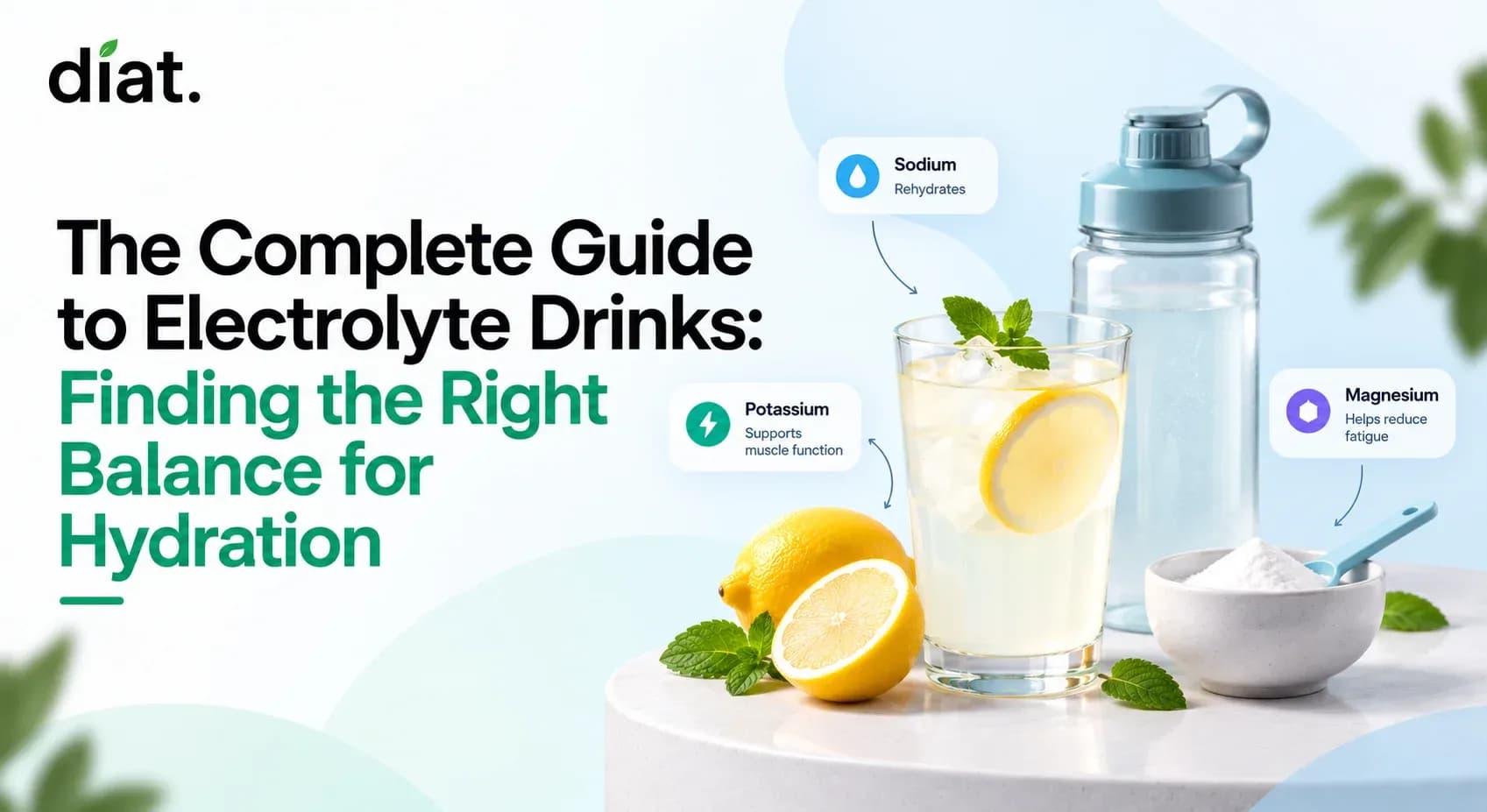
- Sodium: The most critical mineral for active hydration. It helps your cells retain water. The Harvard T.H. Chan School of Public Health notes that heavy sweaters can lose significant amounts of sodium, making it the most important ingredient to replace during intense physical activity.
- Potassium: Works in tandem with sodium to prevent muscle cramps and regulate your heartbeat. The American Heart Association emphasizes potassium's role in counteracting the effects of sodium to help manage blood pressure in healthy individuals.
- Magnesium: Supports muscle relaxation and cellular energy production. A magnesium deficiency is a common culprit behind post-workout muscle spasms and fatigue.
- Calcium & Chloride: Often included in smaller amounts, these support bone health and maintain fluid balance inside and outside of your cells.
2. Can I Drink Electrolyte Water Every Day?
A common question for people building new health habits is whether daily electrolyte supplementation is safe. If you are generally healthy, exercising regularly, or living in a hot climate, drinking an electrolyte supplement daily is generally safe and often beneficial. However, your baseline diet dictates what you actually need.
If you eat a diet heavily reliant on ultra-processed foods or frequently eat at restaurants, you are likely already consuming a high amount of sodium. Adding an aggressive, high-sodium sports drink every day may push your intake beyond the Centers for Disease Control and Prevention (CDC) recommendation of less than 2,300 mg per day.
Conversely, if you cook mostly whole, unprocessed foods at home, exercise daily, or practice intermittent fasting, your dietary sodium intake might be quite low. In this scenario, a daily electrolyte supplement can help bridge the gap in your mineral intake, preventing headaches and fatigue.
Safety Note: Fasting protocols and significant dietary changes are not appropriate for everyone. If you have a history of disordered eating, are pregnant, or are managing a chronic medical condition, consult a healthcare provider before restricting your calories or eating windows. If you or someone you know is struggling with an eating disorder, resources and support are available through the National Alliance for Eating Disorders.
3. The Best Electrolyte Drink When Sick vs. Working Out
Your body’s requirements change drastically based on why you are dehydrated. You cannot use the same drink for a stomach flu that you use for a light jog.
When Recovering from Illness
If you are losing fluids rapidly due to vomiting or diarrhea, your body struggles to absorb plain water. The best electrolyte drink when sick requires a specific ratio of sodium to glucose (sugar).
According to the World Health Organization (WHO), glucose is actually necessary in this specific clinical scenario because it acts as a co-transporter. It helps pull sodium and water across the intestinal wall, rehydrating you much faster than water alone. Oral Rehydration Solutions (ORS) like Pedialyte or WHO-formulated powders are strictly regulated to maintain this exact ratio.
For Standard Workouts and Gym Sessions
If you are doing a standard 45-to-60-minute gym session, you likely do not need glucose for rapid absorption. An electrolyte drink powder mixed into your water is optimal. It replenishes minerals lost through sweat without spiking your blood sugar.
For Endurance Training (90+ Minutes)
If you are running a marathon or cycling for two hours, you are depleting your glycogen (stored carbohydrate) reserves. In this case, sports drinks containing both electrolytes and easily digestible carbohydrates (like maltodextrin or cane sugar) are necessary to maintain your energy output, a practice supported by guidelines from the NIH.
4. Types of Electrolyte Supplements: Powders, Liquids, and Tablets
Walking down the supplement aisle reveals a massive variety of formats. Here is how they compare:
- Electrolyte Drink Powders: The gold standard for daily use. Powders are highly concentrated, cost-effective, and allow you to control the water-to-flavor ratio. More importantly, the best brands (like LMNT or plain zero-sugar powders) omit artificial colors and excessive sugars.
- Pre-Mixed Sports Drinks: Convenient, but often problematic for daily hydration. Many popular commercial brands (like standard Gatorade or Powerade) contain up to 34 grams of sugar per bottle, which the Cleveland Clinic warns can negate the benefits of a moderate workout.
- Effervescent Tablets: Easy to travel with and drop into a water bottle. However, they often contain lower doses of sodium and magnesium compared to powders because of the space required for the fizzing agents (bicarbonates).
- Natural Alternatives: Coconut water is naturally rich in potassium but very low in sodium. If you are sweating heavily, coconut water alone will not replace the sodium you lost.
5. How to Track Your Hydration and Macros in Diat
While tracking food macros gets the most attention, establishing a baseline water goal is just as critical. Diat combines food logging, fasting timers and water tracking into one interface so you can see how your hydration impacts your energy throughout your eating window.
How to log your hydration:
- Open the Diat app on your phone.
- Tap the + (Add) button and select Water.
- Tap the quick-add buttons (e.g., 8 oz, 16 oz) or manually enter the exact volume.
- Important adjustment for electrolytes: Because AI photo estimation cannot "see" the specific sodium or sugar dissolved in a glass of water, use the manual entry or text search feature to log your specific electrolyte powder brand. This ensures your daily carbohydrate and mineral counts remain accurate.
Getting close to your hydration target is vastly more useful than not tracking at all. Tracking your food and water intake builds the baseline awareness necessary to recognize patterns in your energy, fatigue, and hunger levels.
Diat's photo logging is designed for the moments when you don't have time to search a database for a complex meal—snap, confirm, and move on. The app is free to download. Start tracking your baseline today!
Diat is a wellness tracking tool designed to help you understand your nutrition and build sustainable habits. It is not a medical device. Always consult your physician before starting a new diet or fasting regimen. Join 500k+ users understanding their plates.