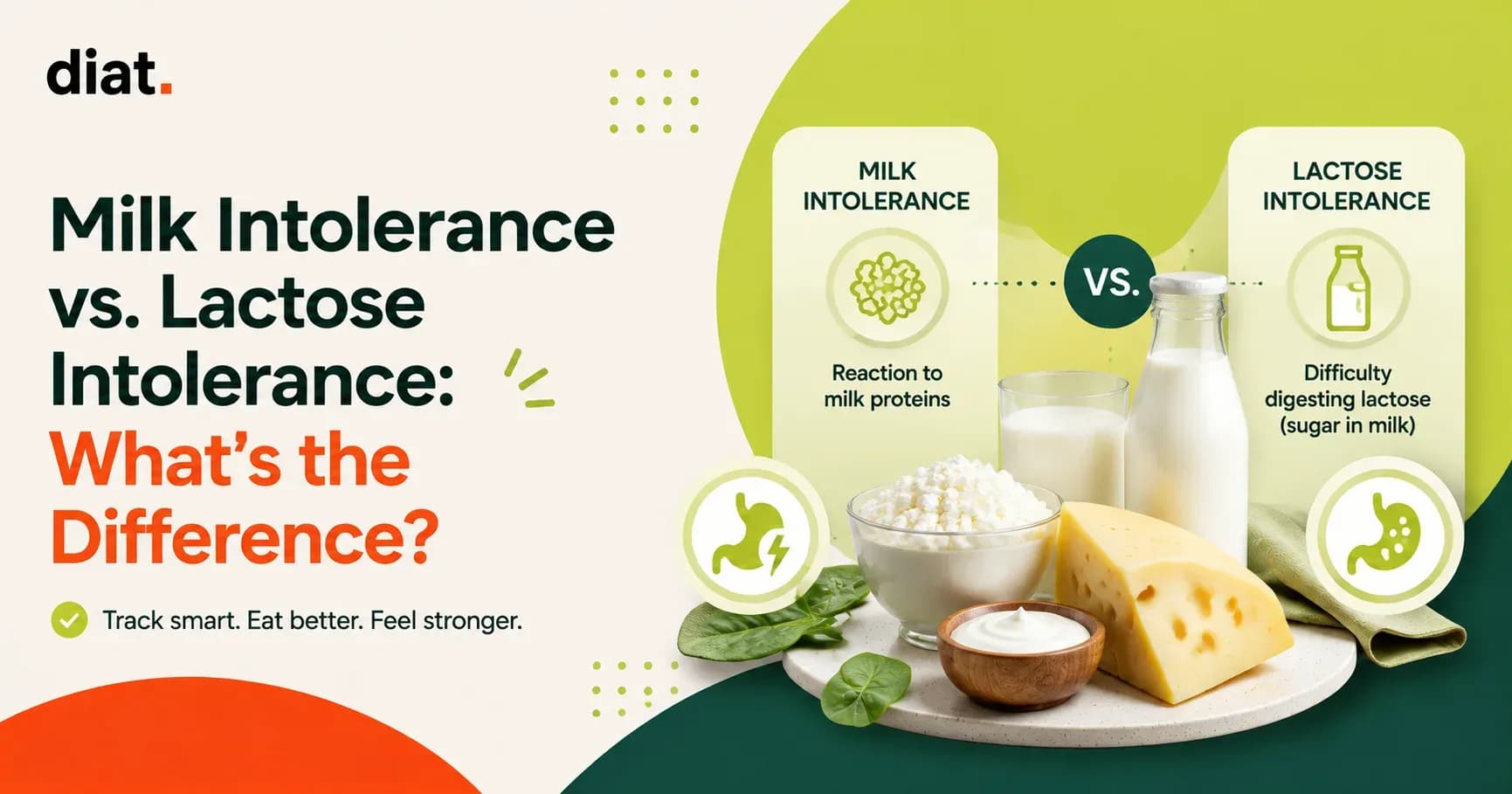
Understanding how your body reacts to dairy comes down to a critical distinction. A milk allergy (dairy allergy) is an immune system reaction to the proteins in milk, which can be life-threatening. Lactose intolerance is a digestive issue where your body lacks the enzyme to break down milk sugar, causing discomfort but not a systemic immune response.
Knowing the difference dictates exactly how you manage your meals, read labels, and track your daily nutrition.
The Immune System vs. The Digestive System
If you experience physical symptoms after consuming dairy, the root cause falls into one of two categories.

According to Food Allergy Research & Education (FARE), a milk allergy triggers your immune system to mistakenly attack proteins like casein and whey. This reaction can happen within minutes and may cause hives, vomiting, or severe anaphylaxis.
Lactose intolerance, as outlined by the Cleveland Clinic, happens in the gut. Your body does not produce enough lactase, the enzyme needed to digest lactose (sugar). The undigested sugar ferments in your digestive tract, leading to gas, bloating, and cramps. It is uncomfortable, but it does not trigger an immune response.
Feature | Milk Allergy (Dairy Allergy) | Lactose Intolerance |
|---|---|---|
System Involved | Immune system | Digestive system |
Trigger | Milk proteins (casein, whey) | Milk sugar (lactose) |
Typical Symptoms | Hives, swelling, wheezing, anaphylaxis | Bloating, gas, diarrhea, stomach cramps |
Severity | Potentially life-threatening | Uncomfortable but not life-threatening |
Management | Strict avoidance of all dairy products | Limiting lactose, using lactase pills, or eating lactose-free dairy |
Tracking Your Food When Dairy is a Trigger
When you remove dairy from your diet, you also remove a primary source of protein and fat. Hitting your daily macro targets requires finding alternative sources and tracking them consistently.
Diat uses AI photo estimation to help you log meals and track your macros in seconds. It is a tool built for the moments when you do not have time to search a database—snap a photo, confirm the estimate, and move on.
Important safety note on AI limitations: AI photo estimation averages approximately 80–85% accuracy compared to manual database entry. An AI camera cannot detect hidden allergens like butter cooked into a sauce or whey powder in a baked good. If you have a severe milk allergy, do not rely on photo AI to declare a food safe. Always read ingredient labels and use Diat’s manual entry for packaged foods. Photo logging is best used for building a consistent macro-tracking habit with whole foods and known ingredients.
How to Log a Dairy-Free Meal in Diat
Tracking your alternative protein sources takes less than 10 seconds.
- Open the Diat app on your phone.
- Tap Log Meal and point your camera at your plate.
- Review the AI's estimated calorie and macro breakdown.
- If the AI estimate misses an invisible ingredient—like olive oil used instead of butter—you can edit portions or items manually.
- Save the meal to update your daily dashboard.
Getting close to your macro targets is more useful than not logging at all. Diat is free to download on the App Store and Google Play.
Build the Tracking Habit
Managing a dietary restriction requires consistency. Whether you are avoiding lactose to reduce bloating or tracking alternative proteins to support a dairy-free diet, logging your food helps you understand your intake. Join users building better habits.
Download Diat free on the App Store and Google Play store.